Commercial cleaning and food hygiene professionals in Brampton support food establishments, commissaries, bakeries, warehouses, and food service operations staying compliant. They decontaminate high-contact points, food preparation surfaces, equipment, floors, drains, restrooms, and food handling spaces with approved chemicals, at correct dilution, and documenting contact times. You need regular sanitation based on hazard level, volume, food allergies, and inspections, plus verification records that support HACCP, quality reviews, and regulatory adherence. The sections below explains what strong sanitation programs should include.
Essential Summary
- Food safety cleaning experts in Brampton cater to restaurants, grocery departments, commissaries, warehouses, bakeries, schools, mobile vendors, and allergen-sensitive operations.
- Cross-contamination prevention is maintained by treating high-touch surfaces, food-contact equipment, kitchens, floors, drains, restrooms, and storage areas with sectional methods.
- Documentation of completion through tests, inspections, and action records confirms approved providers have validated proper chemical concentration, appropriateness, and contact time.
- Hygiene plans should comply with risk, production volume, switches, releases, and guidelines, with everyday, recurring, and annual activities assigned by area.
- Providers should demonstrate HACCP, sanitation understanding, safety training instruction, coverage, credentials, color-coded implements, and assessment-ready maintenance files.
Food Safety Cleaning Requirements for Brampton Establishments
Brampton venues that process, store, prepare, package, or distribute food require food sanitation. Implement it if your business is falls under public health inspections, food codes, or HACCP requirements. The obligation covers dining establishments, employee cafes, food distributors, market sections, meat shops, fish counters, local shops, and commercial kitchens.
Proper hygiene protocols is required in storage facilities, production centers, refrigerated warehouses, bakeries, school nutrition services, event spaces, and delivery hubs. Mobile and temporary operations are included, including mobile kitchens, market vendors, and seasonal booths. Your establishment needs recorded sanitation procedures when your staff work with ingredients, section ready-to-serve foods, heat finished items, or maintain allergen storage. In Brampton, cleanliness remains not elective; it represents statutory, functional, and public health adherence.
What Do Brampton Cleaning Professionals Handle?
Your operation needs cleaning professionals who sanitize all high-touch areas, cooking and food prep areas, all floor types, and toilet facilities for food safety and health code adherence. These zones receive attention due to their elevated cross-contamination potential, trip and slip dangers, and violations of hygiene standards.
If you comprehend their cleaning services, you'll be able to confirm your operation satisfies all operational and regulatory compliance needs.
Prioritizing High-Touch Surface Disinfection
Brampton maintenance experts emphasize high-touch surface disinfection because these frequently handled surfaces can distribute harmful microorganisms and food particles throughout a establishment. You need a scheduling system for sanitizing door handles, push plates, switches, railings, shared equipment controls, POS terminals, and refrigerator pulls. Implementing surface identification mapping, teams identify every frequently handled zone and assign cleaning intervals
replacing cloths consistently, following unidirectional workflows, and organizing cleaning tools by area. Doing so maintains your sanitation protocol measurable, defensible, and inspection-ready consistently.
Cooking Zones, Walking Surfaces, and Restroom Environments
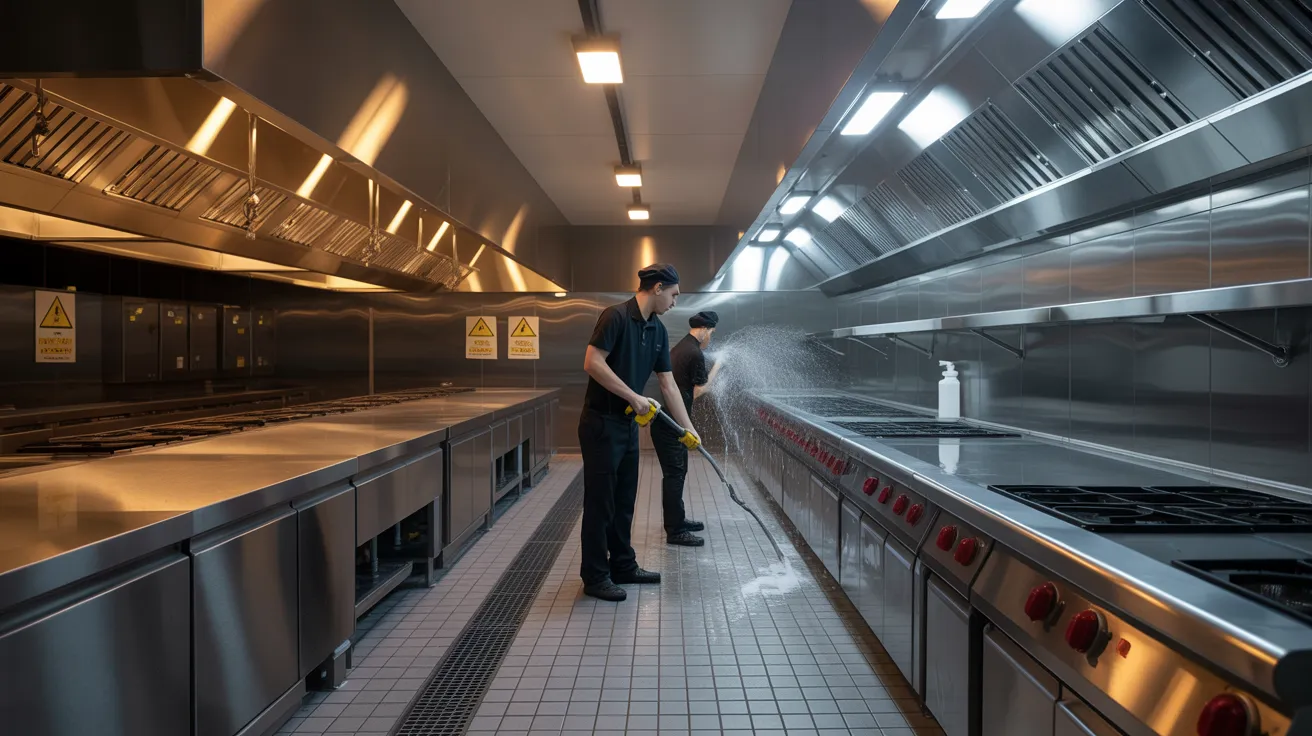
Brampton cleaning services focus on kitchens, floors, and restrooms as each zone involves distinct sanitation, slip-and-fall, and wellness risks. In industrial kitchens, you need grease removal from cooking stations, appliance surfaces, drain systems, preparation areas, and backsplashes to reduce contamination and pest pressure.
Floor care that is documented should equally be anticipated. Technicians scrub and extract buildup from grout, tile, and vinyl flooring, then apply proper moisture management so you can reduce slip incidents and meet regulatory standards. They also handle entryways where moisture and debris migrate indoors.
Restroom sanitation requires decontaminating touchpoints, fixtures, partitions, dispensers, and waste containers, restocking supplies and controlling odours. They also service restaurant moprooms, where chemical storage, sink hygiene, and drainage conditions can affect sanitation compliance and staff safety daily.
How Food Safety Cleaning Benefits Brampton Operations
In Brampton, you must maintain food-safe cleaning standards to meet health code requirements and achieve compliance. You also reduce cross-contamination by cleaning and sanitizing food-contact surfaces, equipment, and high-touch areas correctly. Most importantly, you safeguard public health by lowering the risk of foodborne illness in your facility.
Health Code Compliance
Brampton food companies must comply with strict public health standards, so food safety cleaning is critical to meeting health codes, safeguarding customers, and sidestepping penalties. You must maintain sanitary food-contact surfaces, documented cleaning schedules, proper chemical use, and verifiable staff procedures that align with municipal and provincial inspection expectations.
Should your cleaning standards weaken, you expose yourself to notices, remedial directives, loss of reputation, and potential service disruption during further inspections or enforcement actions.
Cross-Contamination Prevention
Maintaining regulatory compliance copyrights on your capacity to prevent cross-contamination during everyday food preparation and sanitation. You must separate raw ingredients from ready-to-eat foods, sanitize prep surfaces between tasks, and position cleaning agents away from food surfaces. Explicit protocols lower contamination threats and reinforce steady regulatory adherence.
Building allergen segregation prevents key allergens from reaching shared surfaces, containers, or equipment. Leverage separate cutting boards, colored implements, and precise instrument labeling so team members won't blend products in cooking or serving.Enforce handwashing after handling raw meat, seafood, eggs, or allergen-containing products. Swap wiping cloths regularly, and confirm sanitizer strength with test strips. When you train staff to follow these controls every shift, you foster a cleaner, more secure operation that exceeds Brampton's safety standards consistently.
Public Health Safeguarding
Should food safety cleaning collapse, you don't simply risk a failed inspection—you expand the odds of contamination-related sickness harming customers, staff, and the wider Brampton community. You also undermine your responsibility in protecting public health, especially in high-traffic food premises where pathogens travel quickly through surfaces, equipment, and touchpoints.
You must implement sanitation protocols that eliminate contaminants, effectively sanitize, and ensure effectiveness. This involves maintaining exposure times, utilizing authorized sanitizers, recording schedules, and training employees to meet health-unit expectations. These initiatives promote disease prevention by suppressing pathogens before affecting food surfaces or hands. In Brampton, robust sanitation shields vulnerable populations, curtails outbreak likelihood, and proves your diligence. When you adhere to proper protocols, you exceed requirements—you substantially reduce risk and promote secure food service across the region.
Why Is Cleaning Essential for Food Safety Compliance?
Strict sanitation practices promote food safety compliance by decreasing contamination threats, preventing pathogen multiplication, and maintaining your facility's adherence to sanitation requirements under HACCP-based programs and public health regulations. You validate that food-handling surfaces appear visibly clean and microbiologically controlled, facilitating documented preventive controls and inspection readiness.
Conscientious cleaning moreover reinforces allergen management by clearing residues that can provoke undeclared allergen exposure. When you integrate validated sanitation procedures with safety training, your staff can execute established protocols, employ approved chemicals appropriately, maintain records correctly, and address deviations ahead of escalation occurs. Consistent cleaning facilitates audit trails, establishes remediation efforts, and exhibits commitment in audits. Additionally, it assists you safeguard product quality, view resource copyright compliance standards, and lower the chances of enforcement actions, market recalls, complaints, and avoidable safety threats.
How Do You Schedule Commercial Cleaning Work?
Routines for cleaning are most successful when created based on risk factors, production capacity, and regulatory needs instead of just a set calendar.
Arrange cleaning before and following promotional occasions, catering [[services, or gatherings for smooth event transitions.
Finding Quality Brampton Cleaning Experts: A Guide
Evaluate providers first by food-safe sanitation requirements rather than cost. You must ensure each provider understands CFIA, public health, and HACCP-aligned expectations for your business. Request proof of insurance, WHMIS compliance, staff training documentation, and supervision methods. Check technician understanding of contamination prevention, chemical safety, and documented sanitation practices.
You must also evaluate business consistency and oversight. Seek references from food facilities in Brampton, then assess response speed, corrective-action procedures, and communication standards. Ensure the company enables supplier checks and can provide inspection-ready documentation when authorities or third parties demand verification. Verify equipment is maintained, color-coded items are deployed correctly, and operational-specific risks are understood. A reputable service safeguards compliance, product integrity, and your market standing.
What's included in a Food Safety Cleaning Plan?
Put together a written program that clarifies every sanitation task, standard, and responsibility before production begins. You should list cleaning intervals, permitted substances, dilution percentages, exposure times, instruments, and inspection methods for each sector, surface, and equipment. Make sure to include pre-operational inspections, corrective actions, and employee training requirements.
Your plan should also tackle cross-contamination controls, waste handling, pest-prevention measures, and documented schedules for facilities, drains, flooring, and food-preparation surfaces. Outline how you'll distinguish between uncooked and prepared items, support ingredient tracking, and keep accurate allergen labeling through validated cleaning between product changes. You should assign accountability, keep signed records, and assess results against regulatory standards, HACCP controls, and customer requirements. When gaps appear, update procedures immediately and instruct staff.
Popular Inquired Inquiries
Can cleaning services accommodate overnight shifts in Brampton facilities?
If you operate regulated spaces, you'll also require records that enable audits and ensure quality assurance.
Do sanitation professionals provide emergency spill response solutions?
Yes, you can find many Brampton sanitation professionals who provide hazard containment services. They handle contamination, assess risks, isolate affected areas, and start rapid decontamination to minimize risk and prevent business interruption. You should confirm response times, professional credentials, safety procedures, and disposal procedures. If your facility must meet regulatory requirements, select a service that records events, maintains regulatory procedures, and enables compliance verification.
Can eco-friendly disinfectants be deployed safely on food preparation areas?
Definitely, green disinfectants perform safely on food-contact surfaces if you select solutions certified for food use that comply with regulatory requirements. You must confirm contact times, mixing proportions, and rinse procedures before use. Natural-based solutions decrease chemical hazards, but you must have evidence of effectiveness against specific pathogens. To maintain residue-free conditions, stick to exact manufacturer guidelines and ensure your sanitizer meets relevant food safety standards.
Do sanitation programs support seasonal shifts?
Yes, you can adjust cleaning plans for seasonal variations. You should adapt frequencies, staff levels, cleaning agents, and confirmation procedures to align with production rhythms while preserving regulatory adherence. You'll reduce production interruptions by scheduling cleaning around equipment transitions, peak volumes, and usage cycles. You should additionally update procedural documents, staff education, and facility monitoring to capture seasonal hazards, novel allergens, or elevated soil levels. Ongoing evaluations ensure your program functional.
Do professional cleaners instruct your team in proper hygiene techniques?
Certainly, professional cleaning experts coach your employees on sanitation best practices. You obtain employee development on proper chemical use, processing times, cross-contamination prevention, machine disassembly, and documentation. They generally coordinate instruction with HACCP, GMP, and CFIA or local public health standards. Many also run health assessments to verify compliance, identify gaps, and strengthen corrective measures. This helps you copyright standard processes, satisfy audits, and minimize foodborne pathogen risks every day.
Summary
By partnering with Brampton commercial cleaning and food safety experts, you aren't just organizing—you keep your operation inspection-ready and your practices up to code. From kitchens to processing floors, every sanitized surface and organized space reduces pest risk and avoids expensive losses. By arranging service on the right schedule and following a documented cleaning plan, you protect your team, customers, and your credibility. In a strictly regulated industry, clean spaces are mandatory—they're key to business compliance.
Comments on “Trusted Hygiene Cleaning Services”